Showing posts with label gun dog training videos. Show all posts

Monday, October 29, 2012

Dog Health Questions: Could a Working Doberman be a show dog?

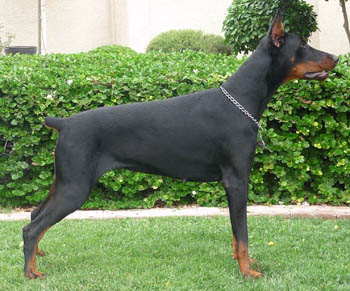
Okay so Last Week on the 6th and 7th of March we had our Dog Show. Well my Personal Protection Dog Club ask me and 4 other people to go to the Dog Show to talk about our Club and safe and responsible Personal Protection Dog Training to the people at the dog show and we were to demonstrate some of the training. Well it was five dogs in total we took a Doberman Pinscher, German Shepherd Dog, Rottweilers, Belgian Malinois, and a American Staffordshire Terrier, we all showed different examples of the training, well when we were taking a 1 hour break I was looking around and found a Doberman Show/Breeder that went Gaga over Hercules my Doberman Pinscher that is a Russian Import and that turned 10 months old 2 weeks ago well she said he had perfect conformation even dough he was a more muscular and like two inches taller from he 4 year old male Ch.show dog, (but Hercules is still going and I believe he is going to be a lot bigger) She asked me if I was showing him, I told her that I was actually here in behave of my P.P.D club along with others and her face when from a smile to a sad look and disappointment an she told me to bad he could have been a champion (even dough he is in my eyes and other people in my club think so also).

Well to resume this long question "Can my Russian Import Personal Protection dog (that is still in training) become a show dog? This is out of curiosity to see if that lady was right, I am a very curios person and I tried to push this to the side to the best of my ability but I guess curiosity won over.

The Different Types of Dog Training


Recommended Answer:
I don't know enough about showing dogs to really say definitively yes or no to this question but from what I've read, the European Dobermanns tend to not be accepted by American standards because of what you've stated above. In fact, this quote that I borrowed from a website that discusses the difference between the European and American versions of the Doberman reads "most of the European champions would be disqualified because of their size in the American rings."

According to my reading, the American Doberman should be as follows:
Height at the withers:
Males: 66 cms to 71.1 cms. Ideal about 27 1/2 inches.
Bitches: 61cms to 66 cms. Ideal about 25 1/2 inches
DISQUALIFICATIONS: Overshot more than 3/16 of an inch (0.5 cms).

For the European Doberman:
Height at the withers:
Males: 68 cms to 72 cms.
Bitches: 63 cms to 68 cms.
DISQUALIFICATIONS: 2 cms over or under the standard.

I say, if a person who shows dogs thinks your dog is good enough to be shown, you should go for it.

Therapy Dog Training, Helping the Infirm


  • I don't know for sure but I don't see why not. A show dog is suppose to be a perfect example of the breed and I would think if it was a perfect example it should be able to work in the field it was bred for. At least this is what I believe, how could it be a perfect specimen if it can't complete the tasks it was bred for....

  • YES. There are a lot of breeders who title their dogs in both performance and conformation fields in all breeds, including the Doberman Pinscher. Many breeders of working Dobies also show their dogs, with great results, and there are plenty out there with titles in both a working field and conformation.

  • I don't know the breed, but I don't see any reason why not if he has the correction conformation. Good breeders breed for the correct form and drive. Form follows function and both are very important. If I were you I would continue in your group your in now, but maybe take a poke in the show ring if your interested. More titles never hurts!

  • If he fits the standard, then yes he could!

    BUT....there are two different styles of dobie show dogs:

    AKC Dobie- http://content.breederoo.com/users/Notor…

    And those seen at International/IABCA dog shows- http://dobermanpuppyforsale.com/img/Fi09…

    I'm pretty sure the standards are pretty much the same. If you want to show him, I would recomend UKC and IABCA.

  • Yes, there are many dogs out there that are also working dogs. My neighbor has two border collies that no only are herders for a small flock of sheep but the are both Grand Champion show dogs. So I would say yes give it a shot, if you don't like it you don't have to do it again.

  • If the dog fits the standard, I see no reason why he can't

    Lots of show dogs are working dogs out of the ring.

  • Yes.
Read More...

Thursday, October 4, 2012

Dog Health Questions: Which is the most respect dog trainer certificate?

I would like to look into switching careers. I see many online courses for dog training but which one is for real? Thanks.... ironic want to change from mail man to dog trainer :)

6 Dog Training Tips For a Well Trained, Well Behaved Pet


Recommended Answer:
Ha that's funny- mail man to trainer...
I would think that if you are going to be doing obedience training that it is National Association of Dog Obedience Instructors - NADOI
You might want to look into these as well
Professional Member of the International Association of Canine Professionals
Certification at the highest level , Association of Companion Animal Behavior Counselors
National Dog Trainers Association
Canine Good Citizen Evaluator
Therapy Dogs International
Animal Behavior Society
Association of Pet Dog Trainers
American Dog Owners Association
United States Dog Agility Association *EDIT* I'm going to star this for you to see if you can get some more answers

Small Dog Training - Small Dogs Need to Feel They Are Pleasing You


    Read More...

    Monday, September 24, 2012

    Dog Health Questions: Dog training at an animal shelter?

    i am in middle school and i want to work at and animal shelter when i get older . i want to help dogs get healthier feed them, love them and find homes for them. I want to be able to make the dogs be happy and play with them and teach them tricks i want to know what does it take to do all of that and if i need a college degree and what kind of thing i will have to learn i don't care if it is volunteering as long as i can help the dogsi need the requirements,what kind of schooling,and i need to know what kind of job is it called to do all of those things?

    Must-Have Tools For Easy And Fun Dog Training


    Recommended Answer:
    You don't need a degree to "work" at a shelter =) But, you could get one maybe while you are working there! =)

    DOG SECTION REGULAR, do you HAVE to always be so rude with your answers? You are talking to a 12 or 13yr old child that wants to work with animals ...OR DID ..OMG!! ....you must be a sad lonely person to be so bitter all of the time!!!! Maybe Yahoo Answers is your imaginary job? Or, maybe you are spending WAY to much time on here..what a loser to tell a CHILD they will be killing animals if they work at a shelter...which is not the case anyway.

    Dog Training with Hand Signals - Hand Signals Help With Obedience Training Your Dog


    • Hi I see that you need some sort of guide that will
      give you tips and tricks to help your dog become
      fully trained and more healthy.Recently one of my friends
      relly needed some advice on how to train his dog.
      He followed the dog training academy course to
      successfully have a full trained dog in a few weeks.

    • Try using more punctuation, please. You are very hard to understand.

      Why don't you ask your parents? Or maybe ask shelter workers what it takes to become a shelter worker.

      Understand it's not all fun and games at a shelter, you WILL have to receive a Euthanization Certification which means you WILL have to kill animals at your job on a daily basis.

    • Animal shelters are run, usually, by the county. In order to work for the county, you must pass a civil service exam. Don't expect to get hired and just be playing with dogs all day. The new hires are the ones who clean up dog kennels, and all the other dirty work.

    • You don't need any schooling to volunteer... you just have to meet the age requirement.

    • 1. Volunteer at the shelter to clean. It's not a glamorous job, but minors usually can't walk the dogs. Even if that is allowed, don't take out wild dogs. Stick with docile, affectionate dogs only. Trust me, I volunteer often, and I can't believe the number of younger volunteers that come in and want to walk the dog aggressive 120 lb Chesapeake. It's fine to want to help, but make sure that you, the dog, and anyone you may encounter will be safe.

      2. Read, read, read. Anything you can get your hands on about dogs. Keep an open mind as you do. Patricia McConnell, Jean Donaldson, Pat Millar, and Karen Pryor are a start... but don't shy away from the more controversial such as Cesar Milan, or even William Koehler. You should have a solid understanding of all types of training, whichever one you prefer. Read up on psychology and learning theory in general, and the training of ALL animals, not just dogs.

      Staff do most training and take care of the essentials like food and cleaning, so volunteers are needed to do the exercising and one-on-one time, which is why strong volunteer bases are so important to shelters. There are trainers at larger animal shelters, and you could conceivably get a job as one with the right experience. A degree isn't as important as several solid apprenticeships with good trainers. It's not an easy job, not the best paying one, and not always a fun one, but it is interesting, challenging, and incredibly rewarding to train a dog, whether it's the mellow family pet or a severe fear biter.

      If you can't follow the path of a full-time trainer, consider fostering dogs. Fostering gives you all the benefits you have described without trying to deal with such a massive amount of stress on the dog. For example, my last foster, an unsocialized laboratory dog with happy tail, was overlooked because of his extreme stress and the blood from his injured tail flying everywhere. Four months of TLC and hard training made him a safe, responsive off-leash dog who gets to live in the country on a dairy farm. You get all the benefits, but don't necessarily have to invest your life in dogs if you have other big interests.
    Read More...

    Wednesday, September 12, 2012

    Dog Health Questions: Is neutering a good thing for my dog?

    I have a 11 month old male GSD, he tends to get really hyper even after i take him for 30-45 min walks, he tends to bark at strangers, and get so hyper at times that he wont listen to me sometimes. Dont worry i know neutering shouldn't be an only solution, thats why he is already in a dog training program. I've heard that neutering stops testosterone levels. So im just asking if he will stop barking at strangers on walks, and just mellow out a little, so were both happy. He's getting neutered next Tuesday, so if there's anything else you want to add about neutering, I'm happy to listen.

    5 Effective Tips For Successful Dog Training


    Recommended Answer:
    Neutering is a great way to go. The surgery in conjunction with the dog training will produce a much better behaved and more enjoyable dog. Not only will it be good for you, but it will also be good for him, because neutering him can drastically reduce his risk of cancer.

    Hope I helped, and good choice.

    Dog Training Secrets Revealed


    • First and foremost if your dog is sick don't neuter him till he is better. The shelter made us neuter our dog even though he was sick and it damn near killed him. Ok now that I have said that about the way he acts, neutering will definitely help. It won't fix everything but it will definitely calm him down, the barking at strangers is more of a training thing as opposed to that, however the hyper part will calm down a bit.

    • While getting him neutered won't hurt, it won't help how he is barking at strangers. He needs extra socialization. Frequent trips to populated places, like dog parks will help. Give the dog training program a very serious shot at fixing this. It's not all up to the training class to do the job. It takes you to reinforce the training at home on a regular basis. German Shepherds need constant training reinforcement to keep them in place. When you do, they can be the best dog ever.

    • Neutering is always a good idea for medical reasons rather than behavioral.

      Your dog is hyper because he is a puppy. His barking is something you need to stop with training.

      He will be calmer a few weeks after the neutering, having surgery does that, but he will still be the same dog.
    Read More...

    Monday, August 13, 2012

    Dog Health Questions: I have a dog training question?

    I have a 1 year old labrador retriever who is very motivated by food. She is well behave but when I want to teach her a new trick she gets so excited about the food it's very hard to settle her down. Then after she has learned a trick like down for instance she is very good at it, but sometimes when I dont have treats with me she'll just sit there and won't go down, even though she knows what I'm saying. So if anyone knows a better way of training her or to have her listen to me all the time that would be wonderful. Thanks

    Dog Training Technique - Correcting Dog Behavior


    Recommended Answer:
    Use a clicker. To fire it up, click and treat, click and treat. Do this several times until the dog gets it. Then ask your dog to lay down. Click and treat. Keep practicing the trick. At some point ask your dog to lie down and just click. See what happens. If only the click works, carry the clicker with you. Then at some point, you could substitute the clicker for your command just like you substituted the treat for the clicker.

    You may have to do this for a couple of days, or weeks until your dog gets it on the command.

    How to Begin a Dog Training Career


    • Reward the dog with affection instead of food

    • You need to mix in some "good girl" praise and fussing, along with the treats, then slowly move more toward the praise alone.

      The odd treat will still be good, but she has to know that there won't be food rewards for every move she makes. Knowing that she will be fussed over should be good enough, and the anticipation of getting a treat will be less and should make her more cooperative.

    • start with treats, but then start treating her only 2/3 of the time. then only 1/2 of the time. and on the treatless times, give her a good pat on the head. then she never knows when doing it will get her a treat, but she'll always have the hope. then you can get to where she might do it for just the pat on the head with only a treat every now and then to keep her hopes up.

    • Try clicker training. The dogs really respond to the sound. And try backing it up with positive reinforcement in the form of petting rather than treats. See if that helps.

    • try mayb using her favorite toy or affection

    • dont go so much on the food tactic she is a retrever and its in the blood to fetch try a toy she really likes...and after a while she will learn or if you want to go with the food one give her a treat every other time she does the trick and the gradually erase the treat and she will get the hand of it

    • Don't reward her with food every time. Sometimes just praise her. Use less and less food reward and more praise. So it gets to where she only gets a food reward once in a blue moon.

    • pets specially cubs puppies and kittens are like babies you have to be very firm and strict no joking around with them when it's time to be serious yell at your labrador she will get the point! say something like i said sit and make her sit with your hands or press the lower back and she will get the picture be the one in charge she is probably playing but make sure she knows you are serious or she wont listen!

    • i've had a few problems with dogs doing that.
      you can continue with the food, but only give it to her about 3 times if she already knows the trick, then replace the food with just a lot of praise 3 times also.
      if she's just learning a new trick, give her treats until she gets the trick completely, then do the technique i told you, above.

      if she doesn't do the trick on just a praise, then don't say anything to her, and walk away from her (ignore her, basically).

      even if you don't ask her to do a trick, like lay down, and she lays down, say "good down!" and praise her a lott.

    • Teach her one trick and be in the room where the food isn't. When she does the trick, then immediately go to the biscuits and treat her. Do this over and over and she will learn the trick.

    • Training a dog with food can be just as harmful as it is helpful, because the dog will associate good behavior with food, and when she realizes you have no food to reward her with, she basically says "the heck with it".

      Here is an article that may help you with your problem.

      http://www.goarticles.com/cgi-bin/showa.cgi?C=1217674
    Read More...

    Wednesday, June 6, 2012

    Dog Health Questions: Dog Training?

    My friends dog is EXTREMELY wild! They have to keep her on a chain whenever they need to put her out....They have a HUGE backyard but no fence....Almost every time someone opens the front door and she's indside she escapes and she runs......fast! We usually know where she goes but she's practically UNSTOPPABLE!!!!!!! We chase her usually one or two HOURS before she even slows down then we have to trick her to coming to us!!! HELP What can we do to get her tamed

    Dog Training How Tos - Laying a Solid Foundation


    Recommended Answer:
    the grass is always greener on the other side. they want freedom may be they don't feel their home as a home. one of my friend's dog does that too and even got knock down by a car once and the dog still not give up yet.
    i will advice your friend to spend more time with the dog, because this is what i feel about my friend; he seldom play with his dog.

    Dog Training With A Clicker


    • In addition to training they should get a baby gate for the door way AND a screen door if possible. The baby gate shoud help. Meanwhile work on sit and stay. YOu may need to google or you tube instructions for training

      there are several methods including standing at door with squirt gun or hose (with our goldens that doesn't work) or someone standing with leashed dog while the other rings bell and you reward as dog behaves and stays in sit... etc. etc.

      A personal trainer is a good thing as they can be objective and ajust your training

    • trainer, they need to train the dog, and corectly

      all what they have been doing so far is directly oposite of any and all training advices that exsist

      never run after a dog, it take it as a game, run away get it to chase you, the dog is faster, you'll never catch up

      dont yell, your "barking" the dog take it as cheering it on, aka helping it and telling it yes this is rigth, more more

      they need to train her to come on comand, and stop encuraging her to run off

      so yeah get a trainer to help them who actualy know what their doing..there several ways to train on this, but atm i think their best bet is being instructed through it because they actualy encuraged and trained the dog to run off...so its going to be harder to retrain it, then it would have been just corectly training it from the start.

    • Your friend should seriously consider finding a reputable trainer in your area that can help with this issue.
    Read More...

    Friday, June 1, 2012

    Dog Health Questions: Dog training help?

    Ok i'm pretty sure you've seen questions that i've posted about what to name my golden retriever and good stuff like that. Well i need some training help. I've been trying to get him to stop jumping but it does not work. and when i let him out of his kennel he runs off and goes crazy ( i let him out everyday so it's maybe an energy buildup thing) and when i try to put him on a leash he jumps up like a freakin buckin bronco and he's wild and out there....but at some points he's not. like when u tell him to sit..he will and u can hug up on him and stuff..but as soon as u back off he'll jump up and go crazy! maybe he's happy then but idk...and he's doin well sometimes on a leash but sometimes he pulls away and jumps....i realllly need some help plz

    btw he's not aggressive at all! he hasn't growled, bitten, or snapped at anyone since i got him (well duh he's a golden retriever.) o yea how can i get him associated with water? he's kinda scared of it....

    plz and thank u

    Dog Training Tips - When Should Dog Training Start?


    Recommended Answer:
    He's just over excitable.
    Make it a rule that unless he has all 4 feet on the floor, he is being completely ignored. If he jumps up, stop looking at him and silently turn your back to him.
    When he gets excited because you have his leash, drop it and walk away until he calms down. If he continues to get excited when you put the leash on him, clip it to his collar and walk away until he is calm.
    He's hyperactive and excitable because you continue to give him attention and what he wants (like walks) when he's in this excited state.
    Patience is key. It will take a while, but if you continue to ignore him when he's excited, you will start to see results.

    Dog Training Fundamentals


    • when he does that stuff give him some water and food, and put him alone in a large bathroom,or room,...after about 3 minutes let him out,..if he still is going crazy, then dont worry about hell calm down eventually, hes just exited for his new home.

    • Enroll in training classes

    • Well since you are doing so well with training, I would say just keep doing what you are doing. For jumping, I say "off" pick the legs off my and dance the dog backward. when the dogs sits, I say "good boy" So they learn that jumping makes me unhappy, and sitting makes me happy. I am sure the energy thing is going on there, but you can work on that. If he pulls hard on the leash, give him less leash, you may be giving him too much leash. Keep up the good work.

    • We have a golden retriever too, and he is a crazy loon as well. Because he is so totally nuts (like yours), we had an electric fence installed so we don't deal with the leashes or leads anymore (which is also safer for us!). We have gotten used to the crazy excitement when it's time to go out. He was a jumper too.

      If he jumped on us, we take both paws on our hands and kind-of throw them down while saying NO! We then tell him to sit while showing an open hand (as a crossing guard shows for STOP) and say "DOWN". He remains calm for about 10 seconds. If more time is needed to open the door we keep repeating it til his breathing returns to (almost) normal. Also, for some reason, when you tell him to sit, he sits on my feet with his back to me, plus he is a "leaner".

      But he is 4 years old and still goes crazy when it's time to go out or when we come home (even if we've been gone for 3 minutes!). We've actually decided that he's a Golden and that's the way he'll be and that eventually as he ages he'll calm down (I'm told it's around 6). We make sure nothing breakable is by the door and that both of our feet are firmly planted so we don't get knocked over, and take a deep sigh when he's finally out in the yard.

      The electric fence was professionally installed and works great, although he needed a heavy-duty collar and some extra training because, well, he's a Golden Retriever!

      He is also not good on a leash - he doesn't pull so much, it's that he can't stay on one side and goes back and forth, so the fence saved us an awful lot of aggravation. If he must be on a lead, we use a very short leash to provide better control. He is very good in the car once we taught him that he can't sit on my lap as I drive, but he insists on sitting behind the wheel when he's waiting for my return.

      Good luck with your crazy fuzzy doggie! You may have to resign yourself that some things are inherent in the breed and make some adjustments to accomodate his nuttiness.

      As to the water - he won't go in a little pool but loves biting water coming from the hose or sprinkler. (Start with that if you can). Ours was 2 before he discovered that it's fun. But be careful as goldens have a tendency to have sensitive skin and after a day of playing with the sprinkler and getting soaked to the skin, tends to get dry scabs on his chest and ears ($30 spray remedy from the vet). And when the sprinkler gets turned off, he gets a little depressed, but a new tennis ball cures that pretty fast!

      Again, good luck!

    • well when he jumps (my neighbors do this) they step on his back paw. not to hurt him but it makes them stop jumping then you can yell at him in a deep but somewhat louder voice "no!" and if you keep repeatidly doing this it might work. i have an Australian Shepherd mix puppy that is like almost 9 months i think. she just had her toe amputated and it was hard to keep her from jumping cuz she had to take it easy for so long that she just had soo much energy. i dont know how to get him not afraid of water but just do the best that you can like maybe take him to a lake and play fetch and play around with him in the water or just buy a little baby plastic pool and fill it up with water and let him swim and splash in that. just an idea though.
    Read More...

    Friday, May 25, 2012

    Dog Health Questions: Dog Training...I need some serious help!?

    I have a tiny Beagle and she likes to escape from the gate we have blocking the kitchen from the rest of the house (she and the other 2 Beagles I have aren't potty trained so we can't let them go all around the house). We have this one gate that seemed to work for a while but now she has figured out how to use her nose to create an opening just small enough so she can get out. It's just so annoying because she pees everywhere when she gets out and she scratches on peoples doors when they are sleeping.If anyone can help, please do! I really appreciate it ^.^

    Dog Training - Instructions to Train Your Dog


    Recommended Answer:
    Yes, invest in a crate or crates, put dogs in them and there will be no escaping. Hope I helped.

    Dog Training Schools - Who is Being Trained, You Or the Dog


    • They have collars that dogs can wear that shock them if they try to leave a certain perimeter around ur house, or use training pads

    • get proper crates for each, and get to training

    • CRATE IT!!!!!!!!!!!!!!!!

    • GET A CRATE AND TRAIN YOUR DOGS!!
    Read More...

    Tuesday, May 8, 2012

    Dog Health Questions: I neet some help with DOG training tips!!!?

    okay- i have a golden retriever (1 year old) and a black labrador. (almost three years old.) so now at their age they both pull on their leashes-the golden doesn't sit or stay or lay down on command. (the lab can) they are just "untrained"(mostly the golden) i try to train them but they never listen! i think its cuz both of them are together but they just wont cooporate and the golden has a problem with jumping and. they are impossible and i dont want to take them to classes becuase i tried that before they just slept troough it. :( any ideas???

    Dog Training and Why it is Important


    Recommended Answer:
    If they are really headstrong, just refuse to do anything until they get what you want. Just keep persuading. If it doesn't work, take them to a dog trainer.

    Review - Secrets to Dog Training is Unparalleled Canine Training Resource


    • Classes are your best bet and in a well run class they wouldn't be sleeping through it. These dogs don't have respect for you and they run the show. You need to work each one individually and you need to make your training consistant and persistant.

    • For the leash pulling try holding the leash very short so they have to walk right beside you at all times. My black lab has learned by that and this... take them (maybe one at a time would be best) to an open area, and holding the leash short, start walking. As soon as the dog starts to pull turn and go the opposite way they pull, do this everythime they pull. You might look kinda silly just walking in circles, but it teaches the dog that they don't get to go anywhere when they pull. Someone suggested that to a question I had on here and it worked the best. As for the sit and stay you just have to keep working on it... and working on it. Alot of people said to reward with treats but ours reacts better to lots of praise. You have to find what works a little and then keep doing it. Good luck! For the jumping... I have no idea. We're working on that one still :)

    • try a head harness such as a Halti or Gental Leader when walking the dogs they will not pull. go to a different class. visit the AKC web sight and go to dog clubs and find a club near you. contact them as most offer dog obed. classes which are very affordable. avoid pet store classes

    • Well, for one, the class was obviously poorly instructed if you're sleeping through it. Classes through PetSmart tend to be very useful - they have YOU train your dog, thus keeping you both active and, in many cases, providing a bonding experience that reiterates the fact that you are Alpha of the pack.

      As for training them, I definately suggest seperating them. I have two small dogs, and when together they get distracted from their training. Take one dog (let's say the golden, seeing as it's more problematic) alone into a quiet room. Don't bring any toys, turn on any TVs, or do anything else that might distract your pooch. He's young, remember - not even fully grown - and his attention span will be very short. Then, try these tips for training:

      SIT:
      I find that the easiest way to make a dog sit is to dangle a treat above its head, just between his ears. This will cause the dog to instinctively sit. As you dangle the treat, command in a FIRM (but not angry) voice "Sit." When training my dogs, I always try and imagine what I'm saying as if it's written - you don't want an exclaimation point at the end of the word, but you want it to be commanding. Remember, you're the Alpha and you need your dog to understand that.
      Once your dog has sat, wait for a count of three (to make sure that it understands that the sitting motion is what you desire) and then feed him the treat. It's often a good idea to say "Good sit!" just so he gets the word in his mind.

      STAY AND COME:
      I tend to teach these two skills together, simply because it's very convinient and they can be strung together easily into one lesson.
      Put your pooch on a lead or a long leash. Have him sit. Then, in the same firm but kind tone, command him to stay. More likely than not, he'll have NO CLUE what you mean by that. But just back up slowly, keeping your eyes locked on your dog's. Undoubtably he'll try and follow you a few times, but gently scold him and return him to his original position.
      Once you manage to have him stay where he is as you back up five good steps or so, crouch down and command "Come." When he comes, act all excited and lavish him with attention! "Good come, Good come!"
      Repeat this over and over and over again until you can turn your back and walk away without having him follow you, and then be able to call him from a standing position instead of a crouch.

      GENERAL:
      -Keep the lessons short - nothing over 15 minutes. You want training to be a fun bonding experience for you and your dog - not annoying and frustrating for both of you.
      -Use low-fat or homemade treats. You'll be needing a lot of them, and you definately dont want your pup to have weight problems! If using the storebought, it's a good idea to cut the treats into smaller portions so they last longer and you use less. Generally 10 treats the size of your thumbnail (per training session) is a good limit
      -Repeat the small sessions two to three times a day
      -Cut short any sessions if your dog is distracted, tired, hungry or frustrated.
      -Never yell! Your dog looks up to you; yelling at him will only make him hate training,Good luck!

    • You need a *good* trainer so that they can coach you on how to properly train the dogs. If your dogs are as unruly as you describe you should search for a good class/trainer. Private lessons are usually more beneficial because you have the trainer's undivided attention.

      Trust me in the end you will be so glad you did!

    • It's time you showed them that you are the boss. I have 2 dogs and it was impossible to try and train one with the other around so you will have to work with them individually. Training takes a lot of time so if you aren't willing to put the time in then you won't get the results you want. Start with the basics of sit and stay before you try anything else. If you're not sure how to do it yourself sign them up for classes or buy a training book at any pet store. Training is all about repetition. Give the dog the command, Sit the dog down then tell him the command and reward him. eventually he will catch on and do it without you showing him. If you can't do it yourself sign him up for another class and make him stay awake and pay attention.
    Read More...

    Monday, March 26, 2012

    Dog Health Questions: DOG TRAINING WEBSITE?

    I have pitbull thats 1/2 years old and i need to train himPS DONT SAY GET A BOOK THE BOOKS I GET TELL U HOW TO TRAIN THEM BUT NOT PECIFICT BEHAVIOR TRAINING

    Dog Training Supplies - Dog Collars


    Recommended Answer:
    How To Train A Dog - The Right Way
    There are so many theories and so much conflicting advice regarding the various ways to train our dogs - it's hard to know who to trust and what to believe.

    This is what I personally consider to be crucial, and always strive for when training my own dogs: To build a strong owner-dog relationship, based on trust and mutual respect.

    To have confidence in, and control of my dogs in any situation.

    Most importantly to have happy, outgoing dogs that are properly socialized.

    To work with my dogs natural drives and instincts.

    Absolutely no cruelty or harsh "old school" training techniques. I certainly don't believe you have to "break a dogs spirit" in the training process. Here's a website:
    http://www.dog-obedience-training-review…

    Bye! and Good Luck!

    Learn the Significance of Dog Training Courses


    • Training is the best investment you can make in your relationship with your dog. You'll need to do your homework first, though, to learn how to communicate what you want in a way that your dog will understand. Stay consistent and patient, reward your dog for getting it right and remember: you can train a dog of any age.

      http://dogtime.com/training.html

    • It sounds like you don't want a do it yourself guide. I'd recommend a local dog school as you will benefit in a number of ways;

      1) you will be learnign from an expert who sees your dog's characteristics.
      2) there will be other dog owners there for your dog to socialise with.
      3) it gets you out of the house so you could see this as a hobbie.

      You could also try a dvd course put together by a professional dog trainer but its not quite the same as the trainer seeing how your dog acts.

      Good luck

    • I used this book and it worked great to raise my lab.

      http://www.amazon.com/gp/product/0307461297?ie=UTF8&tag=yahoo-blog-20&linkCode=xm2&camp=1789&creativeASIN=0307461297

    • Why not just enroll in an obedience class? Your local kennel club can refer you to a reputable trainer in your area.

      BTW, you need to work on your spelling. Does your spell check not work?
    Read More...

    Wednesday, February 29, 2012

    Dog Health Questions: I really want to start ,a dog training program,for shutzund /protection.dogs?

    can any one tell me whats required , i was thinking of a club membership,, i want to run the club i live in oklahoma,
    if any one has more info on how i set this up, please tell me

    Electronic Dog Training Collars


    Recommended Answer:
    Below is a website for rules/regulations for state of OK regarding dog training including for drug dogs, etc...
    After completing & compliance of Oklahoma's rules & regulations, start getting in touch with some of the following agencies and try to set up close ties with them. These individuals hold the power for 'rent a dog' & selling trained dogs for both law enforcement and to private individuals.

    For club membership, contact local private guard services that also use dogs. You may receive not only helpful suggestions but maybe your members, too. Other contacts:

    Find the county EMERGENCY MANAGEMENT (Civil Service) Services. In my county, the Emergency Management Services also does training, certification & duty rosters for the Reserve Law Enforcement Officers who are volunteers but well trained to work with all branches of law enforcement as their backup including when Secret Service Agents come to town. This dept works closely with the local law enforcement dept. This branch hires search dogs and for cadaver dogs frequently. Many times you can get one of the Reserve Officers to volunteer to help training & they receive credits for hours completed.

    SHERIFF DEPT utilizes dogs of various & specific training. Police dogs when weapons drawn, drug dogs (also used at airport) & bomb dogs. Drug dogs also used through private security agencies for periodic use at school searches, large businesses (concerned about possible employee(s) drug problems), etc...

    PRIVATE SECURITY COMPANIES. They rent out guard dogs for interior bldg & exterior fenced yards besides using 'people' security officers.

    Many training words are from another language, German had been the most popular. Not only using a foreign language for commands but many times a slightly different term may be utilized, i.e. 'chair' instead of 'sit' = as if sit in a chair. 'grab' instead of 'hold', 'charge' instead of 'attack'. Also, a motion of head of hand after clearing of the throat sound, similar to sign language has also been popular with the combination of verbal commands.

    Good luck.

    Dog Training Made Easy - Find Out How


    • You establish a reputation as a trainer. At that point, people will ask you about training and come to you.

      I constantly get potential students. Only take selected ones.

      Taught Schutzhund for about 6 years until my back gave out.

    • I'll help you but let's run the company together

    • here are some site for you to check out on other who have started protection groups and also how to get started hope the help
    Read More...

    Tuesday, February 21, 2012

    Dog Health Questions: Dog disciplining/training?

    I have read some of the question that have been answered here. I do know that praising is good, and that hitting them is not good way to discipline them.
    But, when you praise the dog, what is the praise? Is it giving a treat? I just read a book about dog training/discipline and just about all of the lessons require you the owner to give at least 5 treats per lesson.
    Now, there are treats that are VERY tasty, but are backward to the dog's health so you don't give it them that often, but the more healthier ones are not as tasty so the dog may not think it's a praise. Also with the treat idea the dog could be thinking everything is for a treat, and when they don't get a treat, they think something is wrong which can lead to behavioral problems.
    Then some people cannot afford all those treats like me.

    How do you effectively train or discipline your dog without treats (and maybe without toys if the dog is very picky and you can't find one)?

    Get the Most From Your Dog With These 5 Dog Training Tips


    Recommended Answer:
    Reward based training is very effective. The reward can be treats, praise or toys. You have to find what motivates the dog and go with that.

    Some breeds (usually in the Herding and Working groups) and some individual dogs, work VERY well with simple rewards of praise and a small pat. Something that lets them know that the behavior they displayed was correct and pleased you.

    Some breeds (usually Terriers, Working and Toy) and some individual dogs work wonderfully with toys given to show approval on the part of the owner.

    Other breeds and individual dogs simply don't get the fact that they are behaving in a manner that you like, or they simply aren't motivated to behave in such a manner unless rewarded with food.

    As far as treats go, I use hot dogs. The cheapest ones in the grocery store. With my large dogs, one single hot dog can cover a whole session of training. Simply slice the hot dog in half, length-wise and slice the two halves into multiple small pieces. You can usually get 20+ pieces, thus 20 small treats.

    I have yet to encounter a dog who won't work for a hot dog! Hot dogs pack a lot of flavor into every small piece, flavor that dogs adore.

    Also, if the dog is only treat motivated, you start out with the treats and gradually wean them back to simple praise for the reward. The first sessions of training start with a hot dog awarded every time the dog obeys. At about the 10th session, you start only giving the hot dog every other time, with pats and praise given as alternates. By the 20th session, you should be down to hot dog rewards once for every 5 verbal rewards.

    Therapy Dog Training, Helping the Infirm


    • The trainer we had used to train dogs for military use. He told use to put marbles in a pop can. The noise scares them, and lets them know they did something wrong. Now he said to throw the can and hit the dog with it. (only put about 8-10 marbles in the can). The first time used it on my dog, I hit the floor right next to him. His back was turned so he never saw it coming, he was too busy chewing the molding. Ever since then, I just have to put my hand on the can and he stops whatever bad thing he is doing.

    • Treats are just that treats. I have two small dogs and they love treats. Before we began training our dogs to do anything we bonded and earned their trust. After they knew that their new home and family was filled with love and kindness, the rest was easy, just like children they are eager to learn, especially if they know that you appreciate their hard work. So the best praise is love, lots of hugs and good rub behind the ears. I always enjoy when they see my hand as a comfort and not a treat. In fact Shadow our 8 month old has jumped up beside me and I think he wants to learn to type. loo['k[p'p785' (we need to work on this)

    • praising a dog isn't just about giving them a really yummy expensive treat. I'm one of those who can only afford the cheap treats, but they like them as well. Dogs love affection. so even if the reward is without a treat, they still recognize the attention. I don't always give treats. You can simply tell them "good dog" in an enthusiastic and loving voice, as well as pat them on the head, and scratch thier ears, and they understand that as praise as well. When you are happy and excited, they are as well. To them it doesn't matter what thier reward is, just that they made you happy.

    • You can praise other ways other than treats. Try playing with the dog or just giving it your full attention. Sometimes for discipline, if my dog has a chew stick, I'll take it away and won't give it back.
    Read More...

    Saturday, January 28, 2012

    Dog Health Questions: Reliable Dog Training on East side of Cleveland?

    I have a 10 mo. Cane Corso and would like to have her be MUCH more obedient than she is! We tried PetSmart (mostly because it was inexpensive) and it just is not "rough" enough for a dog that is going to be over 120 lbs! I am looking for a training place that allows the use of choker chains but does not cost an arm and a leg. The last place I looked into was over $1000! I love my dog but with this economy I just can't do that. I would like to stay close to home so anywhere on the east side of Cleveland (OH) would be perfect. Thanks!

    Must-Have Tools For Easy And Fun Dog Training


    Recommended Answer:
    I would try looking into the breed club and seeing if they have any trainers listed in your area.

    http://www.canecorso.org/

    You could also try talking to your breeder and seeing if they have contacts that could help you to find a trainer that is used to dealing with dominant working dogs in your area.

    As for gentle leaders/halties I am very glad that these work for you and your dog but often on a confident working breed these are more then ineffective they are a joke. My most laid back male rotties would abuse his strength if I tried walking him on one of those. E-collars, Choke chains and prongs were invented for a reason. Not having control of a dog that will mature over 120 lbs. is dangerous. That doesn't mean that this dog will only ever be able to be walked/or go out in public with one of the collars on but to get his training started on the right foot I think it is necessary. They are a training collar not an everyday collar.

    Dog Training Secrets


    • Personally I have found the best results from Petsmart. Have you tried maybe going to a different one than the one that you went to? My dog is 120 (st. bernard mix) and it worked wonderfully on him. Choker chains are very harmful towards dogs. I'm not sure why you would want to use one. They are mainly used for helping to train your dog to walk with you on a leash. A better choice is to use a gentle leader or a haltee.
    Read More...

    Tuesday, December 6, 2011

    Dog Health Questions: How to open dog training business?

    I am only 13, but I REALLY want to be a dog trainer. I think it would be so cool to help people train their dogs over the summer. My dog is really well trained, and we've even begun to work on our freestyle routine, but I just have no idea how I would start a dog training business, how much I would charge, and how I would get people to come and trust a 13 year old to train their dog. I will be 14 on Monday if that helps at all.

    Dog Training Schools - Who is Being Trained, You Or the Dog


    Recommended Answer:
    You sound like you have a natural talent for training. Unfortunately you are a bit too young and will want to finish HS and then go on to take a few courses in dog training technics so you will have some credentials to back you up. Then you can go from there with establishing a successful business. I wish you the best of luck and keep up the good work. Never give up on your dreams! PS In the meantime you can still study training either through an online course, books, or contact a local trainer that wouldn't mind you sitting in on training sessions with them or maybe take you on as an intern. Just because you are 13 doesn't mean you can't prepare for the time you will be old enough and have the credentials to apply for your own business license. You also have lots of time to think of a snappy name. Mine is "Just Whistle". I admire your ambition at such a young age.

    Things to Consider Before You Go For a Dog Training Career


    • No one is going to hire a minor. In order to start up a business, you'll need to get a business license from your city/county. You'll need to be bonded. You'll need to obtain a liability insurance policy. You will need to get references from the obedience trainer that you mentored under, and you'll have to have a legal written contract for both parties to sign. As far as the financial end of it, you need to speak to a CPA, regarding taxes, etc. You can call the other licensed and bonded pet sitters/walkers/trainers to see what the average charge is in your area. Best place to advertise would be in the yellow pages of your local phonebook.

      Really, again, no one is going to hire a minor.

    • If you are serious about this, find a mentor that is training and showing in the performance ring. Training one dog is not enough to get a reputation as a good trainer. Not all dogs train the same, and training a poodle is far different than training a Rottie for example. You need experience and education before entering in to any business that can be successful. To be a dog trainer you need to develop a reputation as a knowledgeable dog person, and to do this you need to get your name into the dog circles that are actively looking for a trainer. Here is a site you should look in to;
      http://www.technical-schools-guide.com/a…

    • not yet wait till you are out of highschool Sry I know school sucks.
    Read More...

    Sunday, November 27, 2011

    Dog Health Questions: Are my parents contradicting my dog training program?

    A few weeks ago, I started a casual dog-training program for my toy australian sheperd Rex. If you want more details about him, here is my last question about dog-training him:

    http://answers.yahoo.com/question/index;…

    I'm using commands like "sit" and "wait", so I can give him the oppurtunity to calm down before I pet him. (He is very hyper after I get home from school!) Unfortunately, when my mom or dad comes home, they don't always follow through with the plan I have suggested.

    They address Rex with a high-pitched voice, which raises his level of excitement a lot! Then, they pet him before they tell him to "sit" and "wait"! He doesn't have a chance to calm down!

    Are my parents contradicting my dog training program? Will it still work if I continue to do it, or do I have to get the whole family in on the action?

    Dog Training Help


    Recommended Answer:
    The whole family should be in on it - if they will not do it, then YOU must step in with another plan. Have the dog on leash when they come home and tell them flat-out that the dog MUST be calm and they MUST ignore him until then.

    Period.

    That's what i had to do. Or you could just let it go and wait until the dog scratches the heck out of legs, snags stockings, trips them, etc. Then they'll be ready to listen to any plan you've got.

    Part of being a dog owner is knowing what's right for the dog and stepping in to take charge when you know something is NOT right. Even if it's stepping up to mom and dad.

    If the dog does not get consistency then the training will not work well. Will it work some? Yes. My dog was trained well enough with only me being the consistent one (my parents only jumped on the training bandwagon recently). However it IS best for all to be involved.

    Dog Training Basics - Avoid These Five Common Mistakes


    • You already know that they are jeopardising your training program don't you!
      The whole family has to be consistent on this, I have the same problem with my partner not following training for our dogs - needless to say they run rings round him, and won't always listen to me but go to him! It's just like you really - you'll know which of your parents is a softer touch than the other and which you can get away the with most, and the dogs are the same. They'll see you are the disciplinarian and them as fun playmates!

    • You definitely need to get your whole family on board because otherwise it will just end up confusing your dog and yes it is contradicting your training.

      Make something up to scare them into following through lol. Tell them that his behaviour is going to let to aggression or something.

    • Good luck...I'm battling the same thing with my daughter.

      I'm almost to the point of not letting her play with the dog when I'm not supervising (she's 11, so she's old enough to be responsible). Our biggest thing is jumping up and nipping. She allows him to do it...and then doesnt understand why he doesnt behave the way she wants him to.

      I'm not sure if I have any advise for ya....but I'm glad I'm not the only one dealing with this ;)

    • This is such a common problem! If everyone is not on the same page about how to conduct training, the dog is going to be confused.
      Here's an article I wrote yesterday about this topic:
      http://designerpuppys.blogspot.com/2009/09/five-reasons-why-dog-owners-flunk-dog.html

    • Consistency is important for dog training so the whole family has to be on the same page. Maybe you could tell your family that the training is for the benefit of the dog and you all can agree on a plan to train him

    • They are contredicting your program.
      The family needs to use the same plan with the dog, rules are rules.

      It's a shame when family members do things like this because it makes all of your hard work for nothing.
      good luck

    • The WHOLE family needs to get involved and friends/relatives who visit.

      I have told my God son if he continues to undermine my training he is not allowed in my house.

    • There is NO such thing as a TOY Australian SHEPHERD. Your parents pay the bills, so they can do as they please.

    • Yes, they are!

    • When training a dog everyone within the family as well as anyone who comes in contact with Rex need to be on the same page.

      By not doing so the dog will become confused as to what is appropriate and acceptable behaviour.

      So to answer your question ..yes unfortunately your parents are contradicting your training.

      Try and sit down with your parents again and explain that you have done allot of research about training and that you are trying to follow the instructions exactly and would like everyone to please use the same commands as to not confuse Rex.

      Good Luck and many years of happiness with Rex

    • I'm sad to say that your parents are both contradicting and undermining your training.

      I haven't read your other question, but I have an Aussie, and they are very trainable dogs. They were bred to work with a handler. They are also very nervous by temperament. It's part of the energy level they need to have as a herding dog.

      If you have animal planet available, try to watch the shows by Victoria Stillwell and Cesar Millan, who talk about how to train a dog by being a calm, authoritative alpha pack leader.

      It's hard to retrain parents, Evan! If you can find information on this at Cesar's or at Victoria's website, print it and give it to your parents to help them learn why you do what you do in training the dog. To get a parent to accept that you are more correct than they are in dog training, I suspect you have to either have your vet or a dog trainer or some other authority figure (like Cesar or Victoria) speak on your behalf. If you can attend obedience school with your dog, that would help as your trainer is the authority figure and you can probably have the trainer talk to your parents about the importance of having the entire family use the SAME training methods at all times.

      Good luck. I hope you succeed with little resistance @->--
    Read More...

    Saturday, November 12, 2011

    Dog Health Questions: Tell me about Dog training?

    Hi yahoo answer can anyone able to suggest me some of the basic dog training programs .. And also please mention some of the training centers in Chennai

    Rescue Dog Training


    Recommended Answer:
    Dog training: the process of teaching a dog (Canis lupus familiaris) to perform certain actions in response to certain commands which the dog is trained to understand. It is a general term which does not, by itself, describe what or how the dog is taught. Most dogs, no matter their eventual advanced training or intended purpose, live with people who want them to behave in a way that makes them pleasant to be around, keeps them safe, and provides for the safety of other people and pets. Dogs do not figure out basic obedience on their own; they must be trained.

    What To Look For In Dog Training Ebooks


    • Hi Ratha:

      Unfortunately I am not familiar with any specific dog training programs in Chennai. However, I can direct you to some good dog training tips, which provide overall guidelines as well as specifics regarding some of the basic commands to train. In addition, this resource also includes some videos that demonstrate how these basic commands can be taught. Take a look at http://www.golden-retriever-magic.com/fr…

      Hope you find these helpful. All the best with training your dog!

      VJ
    Read More...

    Tuesday, November 1, 2011

    Dog Health Questions: What's your favorite/the most helpful dog training book you've read?

    Mine would probably be Cesar Millan's first book, Cesar's Way. I also think How to Raise a Puppy You Can Live With is very helpful in raising puppies. How 'bout you?

    The Worth of Dog Training


    Recommended Answer:
    I think it's called The Dog Handbook. I'll check in a minute. It was very useful. I got my first copy for my 9th birthday and I read through it. Later on after I moved I got a bigger edition. They talk about everything, and it teaches a lot. It's great for a first time owner or someone who just wants to brush up on their facts.

    Add: It's called Dogs: The Ultimate Care Guide. I haven't looked at it in a while.

    Help With Dog Training


    • Barbara Woodhouse: Walkies

    • Bill Koehler's book on Guard dog training. Even though his protection section is WAY outdated, his OB and problem solving sections are a stellar example of training that still stands and works today in all dogs and all situations!

    • Culture Clash by Jean Donaldson and The Other End of the Leash by Patricia McConnell.

    • Any of Patricia McConnel's books.

    • Sit, Stay, Fetch
    Read More...

    Sunday, October 2, 2011

    Dog Health Questions: What are good dog training classes in Olympia, Wa?

    My dog has a huge digging problem, as well as a problem chasing the cat and I want to find a good training class that is not too expensive but that will do a lot of good and is positive!

    Dog Training Tips - Negative Reinforcement Vs. Positive Reinforcement - Which Is More Effective?


    Recommended Answer:
    buy a dog training dvd. its better when your the one to train your dog so it will be more confident

    Agility Dog Training Equipment


      Read More...

      Monday, August 22, 2011

      Dog Health Questions: What do you look for in a dog trainer or dog training class?

      I haven't really seen this question asked here before.

      I'm interested in a trainer/class training for:
      Pet/manners/CGC training:
      Competition training for obedience/rally/agility: and
      Working dog training for field/ service/ protection dogs.

      I know that there's a lot of good and bad infornation posted here. I'm just curious as to what people's thoughts and experiences are in training.

      4 Tips To Be Succesful In Dog Training Biting


      Recommended Answer:
      I actually asked this at one point and got tons of great answers (i hope whoever answered mine answers this one as well):

      http://answers.yahoo.com/question/index;…

      Comes down to the basics:
      - How many personal dogs are titled/trained
      - How many did you HELP train/title
      - How many mentors, how many years under said mentor(s)
      - Number of dogs worked with, variety of breeds
      - Knowledge of NUMEROUS methods (not just one)

      I do NOT look for degrees form any colleges or schools because i have yet to find a school/class that does a good job in training multiple methods on multiple breeds/dogs. They can be good STARTER courses but you learn best from a mentor or several in real life situations.

      The Basic Commands of Dog Training


      • I look for a trainer experienced in training a wide variety of breeds. Someone who can train poodles and labs is of no interest to me, not because I don't like the breeds, but if a trainer has no experience with more challenging breeds, I'm not going to pay them. I also sit and watch a class before I ever commit my dogs. I want to watch this trainer's interaction with the dogs, see how well they can read the dogs and if they have a wide repertoire or believe in only one method no matter the breed or temperament.

        I've now found an awesome obedience trainer for my Belgians who has years of experience, is a licensed judge and has herding dogs herself (shelties). She impressed me from the first class I attended with how extremely well she could read my dog right from the time she met him. She's a good teacher, willing and able to share all the little things that make a huge difference in competition.

        The classes at the open level are small, 6 dogs, so there's plenty of time for everyone to practice and for the instructor to watch all the dogs. She also tailors the methods used to best suit each individual dog. To me, that's a huge part of what makes a great instructor.

      • One of my frequent pieces of advice for people wanting to start agility is to go watch some classes, and talk to the instructors, before deciding which class to take. I'm always amazed at how many people will sign up for a class (agility, pet, whatever) with the only criterion being that it is the closest one! For people getting started in any dogsport, I want some time spent on foundation behaviors first, with the focus being on developing good teamwork. Person has to learn to reinforce appropriately, set appropriate criteria, direct the dog correctly, and dog needs to learn the specific skills, and that working with his person is the best thing that happens in his world. If I watch an advanced class and I don't see that teamwork, then that isn't the instructor for me.
      Read More...