Showing posts with label aggressive dog. Show all posts

Saturday, November 10, 2012

Dog Health Questions: How do i stop my dog attacking me?

My dog is 22 weeks and since he was a puppy he has bitten me every time i go anywhere near him.
I reward him when i tell him off and he leaves me however he carries on again biting and jumping up me.
I give him two warnings if he dosn't listen he goes in his cage.
He also goes to dog training and eats a well balanced diet which is low in protein and has no preservatives in apart from rosemary.
He does not do this to my mum or her boyfriend however he does it too new people after meeting them for a little while. He's getting on my nerves what can i do?
Oh and he get's a walk a day and he is a Cocker Spaniel

Puppy Dog Training in 7 Lessons


Recommended Answer:
Dogs are not good with warnings. They tend to think in action - reaction.

So what might be happening here is:

Action (dog bites) - Reaction (you tell him "off") - Action (dog stops biting) - Reaction (you give him treat)...now, if he's a smart little puppy, he'll have figured out that biting you will at some point result in him getting a treat. On the other hand, he's probably wondering why sometimes he gets a treat and other times he gets a time out.

You need to change the Action - Reaction pattern, so there is no reward for biting. Dogs are not terribly critical about rewards. Treats is a reward, praise is a reward, attention is a reward, even negative attention is a reward.

So your Reaction should be "no treats, no praise, no attention"

Try this instead:
Action (puppy bites) - Reaction (you yelp, get up and leave, ignoring him completely).

Do this consistently and he should get the point.

When he bites visitors, either have them give the appropriate reaction or simply remove him, giving him as little attention as possible when you're doing so.

All About The American School Of Dog Training


  • maybe an extra walk or 2. keep doing what you're doing, but i wouldn't use the crate as a punishment. find a quiet time out corner and make him stay there a couple minutes. put a blanket down but no toys. he needs to learn to respect you. and putting him in the crate is too easy. and he'll learn to hate or fear the crate.

  • yes you have to be the alpha so try this. when he starts jumping and biting you and you tell him off when he gets off he has to sit for 1 min. before you treat him. he does not get the reward until he sits 1 min. then reward and praise. if he doesn't know the sit command you need to start teaching it. at this point all he knows is jump,bite,off,reward so he keeps doing the bad behavior to get a treat. you need to be in charge of when he gets the treat not him. and he only get it if he gives you a positive behavior.

    if he jumps up on you before the minuet is up say a firm NO!!! just take his collar and put him in cage (don't keep telling him off, no second chances) leave him 10 min. when you let him out of cage tell him to sit and when he does you treat and praise.

    if he doesn't know sit put a leash on him and stand in front of him and take a treat and slowly raise it back over his head and as soon as his rear touches the ground you treat and praise. this is all positive training, a positive reward for a positive behavior.

    it will take some time but if you are consistent ant even practice 2-3 times a day he will learn. lets face it he learned how to get your attention with negative behavior for a treat so he isn't dumb. good luck

  • He thinks hes higher up then you
    show him your the alpha dog
    it may seem creul but you may have to smack him on the nose to show him whos boss

  • show dominace, he thinks he is better then you. what u need to do is put him on his side and keep him down till he gives and stop wriggling. he will bite u while u try to get him dowm but keep going.
    after a few times of this he will get it. do this when ever he bites u

  • you should not be putting a dog in a cage he isnt a budgie, if he is jumping up on you just turn your back and ignore him, dont shout or give him any type of reaction, the cold shoulder will make him understand you dont like him doing that, putting him in a cage will just make his bad behaviour worse in the long run

  • You need to assert yourself as the dominant member of the pack. Your dog thinks he is and it's annoying to him when you try to tell him/show him what you want him to do. If he "goes to dog training", are you going with him?

    I think 90% of problems people have with their dogs can be solved by a change in behavior of the owner.

    Consult your trainer and have him/her assist you with this process as well.

    Good luck. I've been bitten twice in my life (bad bites). One was a cocker spaniel and it was because I got between her and her food accidentally.
Read More...

Monday, November 5, 2012

Dog Health Questions: I need some dog tips.?

I have a Lab/Chow mix. He's a little over a year old now. My issue is that i'm beginning to think he's untrainable. here's a list of things he does that i havent found a successful way in teaching him not to.

gets in the garbage
pees in his cage
whines in his cage
chews up his pillow
barks all the time late at night when he's outside
gets into EVERYTHING
gets food of tables and counters

now, i watch a lot of different dog training shows and have read things on it, but nothing works. Ive tried shock collars, and a thing that emits a high pitched noise when he barks. he's immune to everything, i cant walk him at all. so if anyone has tips that have worked for them please let me know. im going crazy. i have to sneak into my own house late at night cause hell hear me and bark all night in his cage. its getting out of control.

Dog Training Tips - When Should Dog Training Start?


Recommended Answer:
Have you actually attended any obedience classes or just watch TV shows?

Enroll in an obedience class, now. If you "can't walk him at all" then it's a safe bet that he's not getting nearly enough exercise. You have a high energy mix that needs several hours of intense exercise per day. Without that exercise he's going to channel that energy into the destructive behaviors you are describing.

Between obedience class, increased exercise and increased mental stimulation most of your problems will vanish on their own.

Dog Training Books - Why You Need One to Obedience Train Your Dog Correctly


  • why can't you walk the dog??? if it is because you just don't have time... then there is no solution... a dog won't be happy being trapped in a cage.. i suggest you do the crate training all over again, try leaving it unlocked once the dog understands the meaning of crate (a crate should not be a form of punishment Ever...) .... he whines because the dog knows it will get attention try ignoring it... and dogs get scared of being outside by themselves i would suggest leaving him inside... his coat is too thick for shock collars to work... and honestly they are a horrible idea invented by people trying to rip off pet owners... dogs are not easy to deal with and need a lot of time... i suggest you walk the dog and re Do all the training from the start with sit stay down... and go to a pet store for obedience classes... if you can't do this then you should not own the dog

  • EXERCISE!!! dogs, especially labs and chows need lots of exercise. If he are given a productive outlet for his energy, then he will be too tired to bark all night or destroy everything. don't keep him in his cage for more than a few hours during the day.

    If he chews his pillow, don't give him a pillow. Try getting him a hard rubber Kong (at most pet stores, the black ones are toughest) or a few nyla bones. THis will give him something to chew on.

    When he whines and barks does he do this when you are in the room with him? The peeing could be separation anxiety or maybe he just needs to go. Try limiting his water intake before crating him.

    To keep him from getting into stuff you can try purchasing some bitter apple spray, or simply keeping an eye on him. If you are persistent, he will eventually get the idea that you are going to stop him from getting into stuff and so he will not try. I cannot stress enough how much exercise can help with several of these problems. Try taking him to a dog park, playing with him in the yard, or going on walks. when walking him, be firm and persistent. use quick corrective snaps of the leash when he misbehaves and don't let him pull constantly. Good Luck!

  • 1) Never leave a dog in a room with an open garbage can. Get a can with a lid, keep the can in a shut closet or bathroom.
    2) Take the dog out to pee often enough that he willnot have a chance to pee in hos crate.
    3) How long is this dog spending in his crate? Is the dog getting enough exercise? Is the dog being left alone too much? Dogs are social creatures, if your work, school or own social schedule does not give you enough time with the dog, you will always have a problem. If the dog has enough activity and stimulation, the dog will be tired and worn out and will be happy to sleep at night.
    4)Get rid of the pillow and the dog cannot chew it up. A healthy 1 year old dog does not need a pillow.
    5) If the dog is getting into everything, you are not spending enough time doing activities with the dog. Dogs are not stuffed toys. You have an active breed which needs walked for 1, 2 or 3 miles a day or other suitable exercise. The dog needs to be socialized and with people for at least half the day..
    6) Do not leave food on your table and counter . I do not know anyone who owns a lab and leaves food on the table and opened garbage cans around. Put the food away.

    I do not want to be rude. I believe you have good intentions. But I think you are the one who needs trained not the dog. Put the shock collar away. You do not have a consistent enough lifestyle and training program in place to use the shock collar effectively. See if there is a local rescue group in your time who might be able to work with.

  • This is just all way to much to answer in one. I have alot to say but Ill sum it up as best as I can.
    Getting into the garbage and chewing his pillows - boredom can lead a dog into having destructive behavior. Play fetch with him, take him on a walk or run. He has all this bent up energy and has to release it some how and ripping through garbage and destroying pillows are great ways to waste energy for him. Remember a tired dog is a well behaved dog. Take the time each day to exhaust him by playing out back with him or taking him for walks or to a dog park.
    Pee's and whines in cage in his cage - the dog may feel abandoned and frightened when left in the crate you need to reasure the dog that his crate is a good place to be where he can seek settle not something he should dread being in. You need to not use the crate as place he goes to be punished for doing something bad.
    getting food off tables and counters - thats just bad training on your part. the dog has learned that this is a way to get yummy treats for free. you must never hand him treats or even his own food without him having to work for it to. something as simple as sit can go along way as long as he knows he must go through you first to get what he wants.
    barking at night - sign of boredom or the dog may feel stressed being alone. you need to teach the dog to be more independent and make sure you drain him of his energy.
    Email me or IM me on AIM if you have any further questions. Id be more than happy to help you through this.
    Email - srrapko@yahoo.com
    AIM - email me for my AIM screen name

  • Do you know what the Dog Whisperer is? A TV show. There's this guy who has like a pack of 40 or so dogs and he is absolutely amazing in the way he handles them. The show is when he handles different cases of "baddoggieness" with other people. I would definitely watch his show and follow his advise. We have a dog called Annie and she is (or maybe, was) very wild. Couldn't train her. I followed this guy's advise and Annie is now a very well trained pooch. I'm not sure if he has a website; he probably does. Google it. I was amazed at the results
Read More...

Thursday, September 27, 2012

Dog Health Questions: What Science project can I do with my dog?

I have to a science fair project (in 8th grade) and i can't think of any ideas, i asked my teacher and he said try dog training so i said hey thats a great idea. but we have to use the scientific method, and i don't know what my question or problem would be. Please help my and maybe some websites on training dogs. Or maybe even other suggestions for my project. thanks:)

Secrets to Dog Training Reviewed


Recommended Answer:
Intelligence test? Dr. Stanley Coren developed a good one.

http://www.abc.net.au/animals/dog_test/d…

The Right Way to Use Electronic Dog Training Collars


  • If you have the equipment (A good microscope) You can do a project on the difference between cat and dog saliva, and the difference in bacteria. I did that for my 9th grade science fair and won. But, it's pretty challenging. So I'll help you with your idea, ask a question about it for example "Can dog training change my dogs behavior) It'd be really good if you have an older, dog, maybe reword the "Can't teach an old dog new tricks" phrase. Then for a hypothesis just go with your gut, that should be the easiest part.

  • You could look at different training methods (look online for maybe 3 different methods) each method you teach your dog a different command so that they don't interfere with each other. One can be clicker training (treats and positive reinforcement), one just food motivation (also treats and positive reinforcement) no clicker, one can be without treats (some people that using treats is bribery) . Try teaching your dog sit with a clicker and treats, then teach your dog lay down with just treats, and try teaching your dog shake without treats. Test out which method your dog learns better and faster with. Typically you train your dog for small amounts of time, so you can work with that (about 5 minutes of training) and try increasing the time a bit to see if your dog looses interest quickly. You can also replace treats with toys, you can see if your dog is motivated more by food or by toys. There are a lot of things you can try, I'm sure you could come up with a hypothesis from some of these ideas.

  • do that thing where every-time you feed your dog or give them a treat you play a noise.. like a clicker, or bell, or ring and make him sit or something... then after a few times he will learn that the noise means he is going to gt fed and to do so needs to sit.. sounds complicated but some scientist did it to prove developed responses. google it x

  • Maybe you can research different training methods try them on your dog to see which one works best and which one helps him to remember the longest.

  • Red rocket
Read More...

Saturday, July 21, 2012

Dog Health Questions: What dog is right for me?? =] Please help!!?

after my yorkie died last year, i REALLY want a new dog. But not another yorkie because i don't want to find myself comparing or accidentally calling it my other dog's name.
So can you think of a dog that you think is right?

-My mom and I live in a fairly large apartment in the suburbs. It has a large space especially for dogs and there is a long road where i like to take jogs and i think it would be perfect for taking it for walks.

-i have had 3 dogs before so im pretty experienced. And no, i won't use any old stuff from my other dogs on a new dog that i will get [;

-When i leave for school and my mom leaves for work, my mom usually leaves the door open just incase i forget my keys or my purse gets stolen, and its much easier to get inside. We kind of live in the corner of the hallway and the door is sort of hidden, plus this town has a very low crime rate, so a burglary is unlikely. However, i am home alone a lot too so i would like a medium-smaller large sized dog: one that is difficult to steal in case someone DOES try to get in the house and one that barks at strangers but isn't bark-happy. Nothing TOO big though. A large dog won't be suited for an apartment.

-Im 14 almost 15

-i want a god that isn't too hyper but likes excersize.

-must be friendly and affectionate! Can't be mean/aggressive!

-Should be easy to train, and i will be spending time to train it.

-Minimal shedding would be great, but not necessary

-I love "beautiful" dogs. I mean, all dogs are beautiful, but idk how to explain it. I don't like labs or the look of pugs (even though my friend has a pug and its the sweetest thing ever) but i LOVE Australian shepherds and white fluffy dogs

-For some reason i want a white fluffy dog [= But i like a lot of other breeds too

-I am very good at training dogs, so that won't be a problem [= (Ever since my 1st dog i used to watch a lot of dog training shows and i ready many dog training books)

-I like the Japanese Spits, the Samoyed, the Japanese Akita, American Eskimo, and the Havanese, are any of these breeds right for me?

******I know this is long, but i would LOVE your opinion! if you dnt know how to help me, but you read this whole thing, can you star it so some of your contacts can see it? Thanks =]
p.s. I leave school at 7, then my mom sometimes leaves for work at different times. i come home from school around 2:30 so the dog will be by itself for some time. Some of you think this is a bad idea, but i dont think it is because the dog NEEDS to learn to handle being by itself without freaking out. I mean, if we always left it with someone, then one day my mom and i leave to go to a restaurant, it will spazz out! And obviously im going to take it for a walk every morning before school.

thankss<33

Why Is Dog Training The Best Thing We Can Do For Our Dogs?


Recommended Answer:
Siberians and/or Malamutes are NOT apartment dogs!!! I would also stay away from the Samoyeds and Aussies for an apartment because they are all working breeds. Also, the Nordics are VERY vocal and shed like crazy. Of all the features you listed, I think a Shiba Inu would be a perfect match. They are not very vocal, have short, dense coats, are weary of strangers, very aloof, and great little guard dogs. They also don't mind being alone, and are extrmemely clean dogs. They are one of the smaller members of the Japanese Spitz family, but don't have the yappiness of the Eskimos, etc.. And they look like Mini Akitas! :) Good luck!

How to Select a Good Online Dog Training Course


  • King Charles Cavalier
    Chinese Crested
    Pom
    Papillon
    Pug
    French bulldog
    westie

  • Poodle
    Dachshund
    Shih tzu
    Maltese
    Cocker Spaniel

  • Maybe a white pomeranian however you spell it, they don't need a whole lot of exercise, if you train it well, I don't think it'll bark that much, they're so cute and are pretty nice apartment pets, I don't think it'll be able to take care of its self at home though, you could get two of them and a spare room, this may not be the best choice but I think if you've chosen a yorkie, you'll be fine with pomeranians

  • border collies r very easy to train there very smart dogs there are a bunch of different colors of them like black brown light brown and sometimes u can find a white one there not mean they love people and r very playful and they love to run there meduim size dogs they r a little bit smaller than a lab. im in 7th grade and i have a sister in high school we both have sports right after school both my parent works so my dogs at the house by himself for up to 10 hours sometimes. there very cute as puppys and as adults u can google border collie
    images and there r a bounch there

  • I would recomend an Alaskan malamute, White husky/ alaskan malamute mix (they're beautiful white fluffy with blue eyes) or American eskimo if you want something a bit smaller. Very smart dogs

  • There are many things to consider when choosing a puppy, including which breed or type, and the optimal age of acquisition. It's important to make sure the dog you want fits with you and your family's lifestyle.

    Check these links for more info.
    http://dogtime.com/selecting-the-right-p…
    http://dogtime.com/mixed-breeds.html
    http://dogtime.com/puppy-dog-breeds-dunb…
Read More...

Thursday, June 21, 2012

Dog Health Questions: Okay. can't have a dog, but i'd still like to train and care for one besides our other dog?

I LOVE DOGS especially smaller ones. but im not allowed to have one. id like to be able to walk dogs, train, and care for tem. but my street is busy. is a dog daycare okay? im 12 how much would it cost, and wat would i need?

What Is The Best Approach To Dog Training?


Recommended Answer:
Why not volunteer with an animal rescue centre?
In England (sorry, not sure where you are!) the RSPCA are always looking for people to help out, a lot of dog walking, cleaning kennels, interacting with the animals, etc.
I volunteered with them for a few years when I was 17 and I loved it, I only did it every 2 weeks due to other commitments, but it was really nice to know I was giving the animals something they didn't have prior to being rescued.

Using Dog Training Collars to Train Your Dog


  • Unfortunately you are much too young to open a doggy day care, it would require a permit from the area where you live, lots of liability insurance, health inspections, etc.

    Have you considered doing some volunteer work at one of the shelters? They have a great need as the more people there working with the dogs the sooner they become socialized enough to be placed in new forever homes.

  • Maybe you could join/ask a 4H club and ask them. I know i was in one and i have alot of dog handling books and training books. But maybe a poster to advertise your 'daycare' or you could go around asking your neighbors.

  • Certainly look into volunteering. It is very rewarding and you get the chance to scope the exact breed that you'll want when you're older and can have one. Good luck.

  • If your not allowed to have dogs, then there is no way you will be able to have a doggy daycare.

    Offer to help out at your local animal shelter.
Read More...

Saturday, May 19, 2012

Dog Health Questions: Why does this Service dog orginization only use black or yellow labradors?

http://www.ksds.org/dogs/training.html It says only black or yellow, not chocolate. Why?

Hunting Dog Training Equipment


Recommended Answer:
Chocolate is recessive, and breeding yellows to chocolate creates an even more recessive yellow, called a Dudley. Chocolate Labs are bred more often than the other two colors because the public demand was for Chocolate, which more people seem to prefer over plain old Black and Yellow Labs. This has increased the amount of pet bred over bred hyper Chocolate Labs with no off switch, which is NOT what you want for training a Service Dog.

You CAN find Chocolate Labs in field lines, they are just a bit rarer. My own SD is a Chocolate Lab, and she has been wonderful. She is out of field lines herself, but she's not interested in birds at all. Perfect for a SD, but no so perfect for someone who wants to hunt ducks with their dog.

People that seek out a specific color of Lab are usually going to go to someone who is a BYB and the number of Chocolates in rescue is because of the crazy fad for Chocolate Labs.

Just my two cents anyway.

Keeping Your Pet Dog Trained


  • A lot of Service Dog Organizations only use labradors because of their even temperaments, medium size and weight intelligence and eagerness to learn. Many other breeds do possess all or some of these traits, but most Service Dog Organizations only have experience with or have a long standing relationship with lab breeders or rescuers.

  • something to do with them being overbred.. not as likely to have the work drive.

    while you can find all 3 colors in a litter.. you dont typically see chocolate in working lines.. its just less common.

    These facilities have strictly narrowed down what they feel works best for their program.. they have a much better success rate when they use such strict guidelines for choosing potential service dogs. It costs a lot of money to raise a puppy.. even to get it thru that first year to be evaluated as a guide dog.. they want to eliminate that failure rate as much as possible.

  • They have their own breeding program. Chocolate is a recessive gene. It is possible that their breeding program simply does not carry the gene to produce chocolate. That could also be intentional.

    Yes, there are those who claim that chocolates are less intelligent, and in a way I do believe they are right. However, I don't think the color itself has anything to do with it, but more the breeding practices behind it.

    You could always email and ask.

  • Chocolate coloring is the result of inferior genetic combinations. Professional service dog organizations breed their own stock to avoid such genetic aberrations.

  • I've heard that chocolate labs are less intelligent. It sounds ridiculous, but as far as I know it's because they're vastly over bred. Most people working labs won't use chocolates, either. I only see chocolates as pet dogs.

  • chocolate labs are not as common, for the reason everyone else stated and I have heard many trainers say they are slower to mature mentally.

  • Maybe easier to train them, or they have a higher demand for the yellow or black lab.

  • my guess is its a preference of their trainers or there might be a behavioral difference that makes the chocolate lab less desirable for the process

  • that's all they have, don't know why. have to ask them
Read More...

Saturday, May 5, 2012

Dog Health Questions: Who dose someone call to get a dog trained?

I have a dog, shes a pit bull, and i want her to be trained to help people and dogs. Like a therapy dog. to help shy people and dogs to come out of there shell and thing like that. but how dose one go about starting something like that?

Dog Training - Why and How to Train Dogs


Recommended Answer:
You start with basic training at a pet obedience class. Some dog schools and dog clubs will offer a therapy dog class for the additional skills needed to pass the test, but this isn't strictly necessary. The Delta Society even offers a home study course if you are already experienced in training pet dogs.

Once she's trained, you'll need to get her tested with the therapy dog organization of your choice. The top three organizations in the US are:
http://deltasociety.org
http://tdi-dog.org
http://therapydogs.com

Check with the facilities you want to be able to visit to find out what they require. Some will require registration with a specific organization and no other. Because therapy dogs visit by invitation only, each facility is free to set whatever requirements they like and if you don't meet them, then you don't get to visit there.

Contrary to what one answerer said, it is not necessary to get your CGC before taking the therapy dog test. The CGC is included in some organizations' therapy dog tests, but neither of the first two on my list (which I have personally registered two dogs with) required a CGC as a condition of taking the therapy dog test.

Once you pass the test, you register with the organization. Registration includes ID, educational materials to present to facilities you wish to visit, and liability insurance which is something facilities really want to see.

Dog Training Part I


  • First, you'll want to have your dog get her CGC (Canine Good Citizen) Award (see http://www.akc.org/events/cgc/). Use the IACP search tools at http://www.canineprofessionals.com to find a trainer in your area that can help you with this and hopefully they will be an evaluator as well so it's a one stop shop. Once CGC is obtained, you need to hook up with Delta Society or TDI (Therapy Dogs International) and go through a program to get certified as a therapy dog. That is the formal route. there are, however, other programs you can get into like the ones where kids read to dogs where having your CGC is enough. Either way, I feel your first goal should be to get that CGC. It's not too difficult and opens a lot of doors.

  • What a wonderful person you are to want to do this. If your dog is good with people kids, and all other animals, I think it's a great idea. You should first get in touch with old age homes, and let them know you have a wonderful friendly dog that you would like to bring in to see their patients. If all goes well, get in touch with a trainer that can certify your dog for what ever kind of working dog you want her to be.The trainer will help her and you to train her. Therapy dog's are great. Good Luck, and don't give up. This is a wonderful thing you want to do.

  • You would do the training. People don't train your dog for you, regardless of what you want to use her for.
Read More...

Monday, April 23, 2012

Dog Health Questions: How much would it cost to get a dog trained at pet smart?

i tried calling my local pet smart store but they were busy with other callers. i waited for 10 minutes before i hung up! but anyway, he would need the basic training because he doesn't know any commands and hes not house broken. hes a 6 month old male shih tzu. and also how much would it cost at petco too?

Dog Training - Basics


Recommended Answer:
About $95 for one class (6-8 weeks), give or take $10 either direction depending on your location. PetSmart training is hit or miss. I've had great experience, but strongly advise you to go to the store and observe a training class. Good luck.

Understanding Dog Training Schools


  • try going onto

    www.petco.com

    www.petsmart.com

    or google

  • its fairly cheap, around $5,000,000,000 plus tax, dnt forget

  • its about $100,000,000,00 :)
Read More...

Thursday, April 5, 2012

Dog Health Questions: Dog training help please?

I have a 11 month old male puggle(or beagle pug mix) He is a rescue and i don't know much about his background besides he lived in a puppy mill with 9 other dogs in 1 cage. Well we finally got him leash trained by using a no tug harness. Its helped a lot and its not as embarrassing walking him down the street with him pulling me... There is one thing that still embarrasses me. When we walk him and a dog walkes by he pulls, howls, and his back hair stands up. He has had socialization with dogs before but hes only been off leash and played with 1. What can be causing this behavior? And what can i do to stop it? O yeah and we got him when he was 9 weeks old. He was taken out of the puppy mill early and had to have a sareget mother for a couple of weeks. can this be the reason?

Dog Behavior Training - Dog Training to Correct Behavior Problems


Recommended Answer:
i think you should just vacum him up with a vacum lol i love jacksons wrinkles

Get a Well Trained Dog With Dog Training Guides


  • His upbringing before you got him could be a part of the problem. Also, many dogs are just leash aggressive, so when you take them off the leash they are friendly to other dogs, but on the leash it's a whole different story.

    Either way, taking him out to dog parks where he can socialize and play with other dogs is often the best way to get him over his aggression. This might take time and patience on your part, but eventually he should get used to other dogs and even learn to like being around them, both on and off leash.

    And don't be embarrassed! Dogs are dogs, and anyone who has a dog knows they can all have their quirks!

    Good luck!!

  • The most likely cause of this is your pups lack of confidence. A very effictive way to handle this is to distract your puppy when a dog is passing by. It helps to teach your puppy to sit. Distract him with treats. I did this with my beagle and it worked great! I got this from professional dog trainer Victoria Stelwell in Animal Planet's Its Me or the Dog. Its a very helpful show that helps dogs behave better. Goodluck! => Try this its very effective.

  • There are several different methods for dealing with leash aggression. The prong collar/correction method is doing wonders for my dog, but your dog may not respond to that particular method. When a dog is scared he enters a fight or flight mode. The leash is preventing the flight, so he does the only thing he can which is let the other dog know that he is prepared to fight if that dog were to approach him. Setting him loose in a dog park is not going to address the issue. It could actually cause more trouble than you anticipated- your dog may start a fight, or a more dominant dog may target him when he senses that your dog is fearful. Consult a behaviorist to find out what's going to work for your dog.

  • Obedience training is the foundation for establishing a better relationship between you and your dog. Obedience training helps establish the owner in the role of "pack leader". Obedience will lay down clear behavior guidelines that your dog can follow. A well-behaved, obedient dog is more than just a pet of pride. The difference lies largely in the training, and good training can save a dog's life.

    These articles will give you tips about how to best train your dog.

    Dog Training - http://www.dog-pound.net/dog-training.ht…

    Dog Obedience - http://www.dog-pound.net/dog-obedience.h…

    Repetition, consistency, practice and correction are what it takes to train a dog to be happy and responsive. If you follow these simple steps you will find that your puppy can grow into an obedient well-adjusted dog.

    Repitition and Consistency in Dog Training - http://www.dog-pound.net/repetition-cons…

  • heres a good blog for dog training :

    www.free-dog-training-tips.com
Read More...

Tuesday, March 13, 2012

Dog Health Questions: My dog needs some training and I need help knowing how to do that...?

So my dog is a 3 year old Border Collie/ Dalmatian/ Blue Healer and is very anxious when it comes to new people or animals. He has been to the Pet smart dog training before and learned the basic commands. However he barks very wildly at the doorbell, anyone walking by, dogs, cars, and people. He is extremely friendly but needs to learn how to do these things. How could I train him how to teach him to become calm with the doorbell, anyone walking by, dogs, cars, and people? Thank You very much and I appreciate any answers.

Control Your Aggressive Dog With These 4 Dog Training Tips


Recommended Answer:
There are some excellent sites out there that can help you if you wish to go it alone. See:

Adult Dog Training (2 years+) | Dog Star Daily

Older dogs become more wary of the world in general and especially of strange, scary and unfamiliar stimuli. Make sure you give your adult dog plenty of ...
www.dogstardaily.com/training/adult-do… - Cached - Similar

Dog Training Using Electronic Collars


  • Bring him everywhere (not literally) with you and have him sit when people come over to see him. Encourage people to pet him ("would you please pet my dog? He's in training.")... I actually did this last year with one of my dogs, and she is much better about people and other animals now.
    You can get a one-to-one trainer by searching Canine Specialists in your area.
    Bring dog cookies where ever you and your dog go, and when he does something you want him to (not bark at the door bell or other dogs when you say "quiet" or "no") get very very very excited (look like a fool- it's the only thing that really works), ump up and down, scratch him ears, give him a little bit of cookie.
    Work with him. It won't change overnight, but you will notice changes if you devote yourself to changing and helping your boy.
Read More...

Wednesday, February 1, 2012

Dog Health Questions: Shock collar, dog training classes, or getting her fixed?

if i got my 8 yr old lab mix dog a shock collar and only used it whenever she attacked our other dog who is a 10 month old husky would it stop her from fighting the husky? the lab has become very dominant and aggressive towards the husky for the last month or 2 since the husky went into her first heat cycle. every time the husky walks near her she'll stand her hair up on all ends and growl like she's about to attack. visiting family she attacked the husky 4 times in a 10 day period. both leading to 1 of them having a little cut on each other. i know it sounds mean to get a shock collar but she's been ridiculously out of control with her attitude. so... would getting her fixed help stop her fighting? would a shock collar help stop her fighting? or training classes stop her fighting?

Secrets to Dog Training Reviewed


Recommended Answer:
Get fixed and attend training classes and there's little reason to need a shock collar.

Three Common Dog Training Methods to Avoid


  • Get them fixed, duh. A shock collar is pretty useless if an animal is attacking in a heated fury. Training goes down the toilet when instincts kick in. So the only option is the one that actually solves to problem: Get both animals fixed if the haven't been already.

  • Even if you bought a shock collar, you'd need a trainer to show you how to use it properly.

    Get them both fixed and call a trainer.

  • well if shes only aggresive when she is in her heat cycle just get her spayed
    but if you dont want to get her spayed get a trainer
    i really dont recommed the shock collar

  • training, socialization, exercise might help
    spaying both might help
    constant supervision will help

  • sounds like she is trying to establish the alfa spot over the younger dog. shock collars are not always the answer. try getting her spayed, at the age of eight the secondary sex characteristics have long been in place with her. it is usually better to spay them at an early age before the secondary sex characteristics have had time to establish themselves. it may also help to have to other dog fixed also. before the sexual hormones have had time to mature. by spaying or neutering them this will aid in them not trying to establish the alfa position and stop allot of the fighting. hope this helps

  • No, a shock collar will NOT stop aggression. In fact, it is likely to worsen it.

    Spaying BOTH DOGS may or may not help to some extent with the fighting. Your best bet is to spay both and hire a good trainer with experience addressing dog aggression to evaluate them and develop a training program. Training classes address basic obedience, not aggression, and will not help. Even if to you it appears the lab is the one instigating things, in a lot of cases, it's the dog being attacked that is the cause of the fight, and the owner is just not knowledgeable enough about canine communication to recognize that. It is possible that your Husky is now challenging the older dog for leadership. Even if she's not the one ending the confrontation, she could be the one starting it.

  • Again.
    The E collar is not meant to be used as punishment. You would not put one on, acclimate your dog to it and then "zap" her whenever you wanted to stop her from doing something.
    The proper use of the collar is for field work, or for obedience training (which many people do not agree with). In obedience training the dog is acclimated to the collar and taught to pay attention to your command by the lowest setting that gets her attention. It is not painful or cruel or "mean". Used properly, it is a good training tool that can be very successful.
    You need to have someone who knows what they are doing..evaluate the situation immediately. And yes, spay her immediately! There is more estrogen in an adult dog than in a puppy and the levels rise sharply with menstruation. Your lab mix is probably reacting to this scent getting both excited and dominant. This often happens with 2 females.
    When you speak of training classes, do you mean classes to train her not to fight? Have you ever taken her to class before? How does she usually get along with other female dogs?
    I would definitely and immediately find a reliable trainer...I recommend private for your particular problem...and sign them both up. They will be able to give you the best advice for both behavior modification and for training solutions. Don't be put off if e collar is suggested...it is only one method of training, and may or may not be right for you. But you have to get this under control before a) your dogs become habituated to this behavior and b) before someone gets seriously hurt. Good luck.

  • Getting all dogs involved fixed will lower the tension considerably. Intact females typically fight more than intact males. There's a good reason female dogs are called b!tches.

    Training classes will not stop fighting. What they WILL do is help you establish order in your household. They will allow you to work with both dogs, teach them to reliably respond to commands, and remind them that you are in charge and they should be looking to you for leadership.

    Static ("shock") collars have their place in extreme training circumstances, but I would save that as a last resort. Get your dog(s) spayed and put them through some basic obedience, and see if the problem resolves itself. One of the biggest problems with static collars is they don't leave many options if they don't work.

    Other things you can do to help the problem, is make sure they're both getting exercise, remove any toys or treats that they fight over, make sure they both get equal attention throughout the day, and separate them for meals, potty breaks, sleeping, and when you're gone.

    When the dogs do try to fight, make sure you don't go running in yelling and waving your arms- that just encourages the behavior. Don't say anything, just restrain both dogs and remove the offender from the room for a short time-out. (It may help if you leave a short nylon leash attached to both dog's collars when you're home, so that you can grab the leash and pull them back without getting close enough to get bitten. They also make short, emergency handles you can by that are only a foot or two long and hook on the collar.)

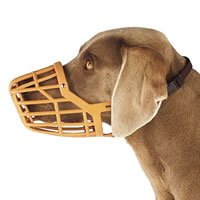
    Another temporary measure until you can get them spayed and start training, would be a basket muzzle for the attacker. If properly sized, the dog can comfortably wear it while inside the house with the other dog. They can still breathe, pant, bark, and so forth, they just can't bite.
    http://forum.oes.org/images/zw129.jpg
    Do NOT keep a regular nylon muzzle on the dog! They pin the mouth closed and prevent proper breathing/panting. Nylon muzzles are for VERY short term use (less than 10 minutes is preferred) for things like nail trims and vet exams. They are not safe for long-term use.
    http://www.midwestgrooming.com/image.php…

  • Don't get her fixed, that won't really help. Shock collar- I don't think so.
    Try training your dog yourself. Just look her sternly in the face and command her to stop, don't yell though. But, out of all your ideas, I think Dog Training Class is the best way to help your Lab. If money isn't a problem that is.
Read More...

Tuesday, January 10, 2012

Dog Health Questions: Dog training help please?

I have a black and golden retriever and i want them to learn how to take objects willingly from me. however they do take tennis balls, and doggy toys and bones from me but if its stuff like grabbing blankets (part of waking me up training) and grabbing cloth (part of opening fridge training) or grabbing water bottle or grabbing regular house hold items they just won't do that. How do you teach dogs to grab on to things other than dog toys and bones and balls

6 Step by Step Instructions For Dog Training Preparation


Recommended Answer:
Looks like half the job is already done for you. The problem is that dogs don't generalise well- they understand that they are allowed to pick up certain items, but don't understand that they can pick up other items.

There are a few different things you can do to encourage this behaviour.
The first one is to make a game out of it- if you want your dog to pick up things like blankets he needs to understand that he is allowed to pick up this kind of material. You might want to make a flirt pole and use some old blankets to encourage him to show an interest in blankets and have them in his mouth.
There are also toys out there that you can put water bottles in- so these might be good in desensetising him to water bottles and encouraging him to handle them in his mouth- most dogs love the crackling sound that plastic water bottles make!
Instead of using a cloth on the fridge, make up a fabric tug toy out of polar fleece and encourage him to play with it, then attach it to the fridge and encourage him to play tug with the fridge door.

You can also try a fourced retrieve or similar where you physically put the things in his mouth, hold them there until he accepts it, and then reward him for holding the item.

Remember that these are not easy commands to teach, and most service dogs are trained from a young age and even then not all of them make the cut- so don't be too harsh on your boy if he takes a while to catch on. Start small- baby steps, and gradually work up to the big picture.
It helps if you sit back and divide the command into say, 10 parts.

The first part might be encouraging the dog to bite the fabric- in which case you would encourage any move towards the fabric, then when he starts mouthing it give him plenty of praise and rewards and when he is biting it 10 times out of 10 you can move onto the next step.

The second part might be to play tug with the fabric, etc.

The third part might be to attach the fabric to some small item (Maybe a low cabinet door- something that will open easily) and encourage the dog to play tug while youre still holding the other end.

The fourth part might be to encourage the dog to tug the fabric attached to the small item but you arent holding it.

Clicker Dog Training Will Make Your Pet the Next Neighbourhood Wonder


  • Use clicker training till the dog understands how to offer behaviors. Then you can teach the dog to pick up household objects in one minute
Read More...

Wednesday, November 16, 2011

Dog Health Questions: What is a cheap but great dog training place in NY queens?

my dog needs training

Successful Dog Training Tricks


Recommended Answer:
Petsmart has training classes for about $119. The classes are once a week for eight weeks. I mean I guess they aren't cheap cheap, but it's definitely worth the money. If you're interested, you can check out the website: http://www.training.petsmart.com/

Or something even cheaper to do is go to the pet store and buy the book, "Dogs For Dummies". It has pretty much every bit if information you'll need for training your dog. But a negative to it is that there wouldn't be a trainer there to guide you along the way.

Best of luck!!! ♥

The Shocking Truth About Electronic Dog Training Collars


  • Oh god...what is his name? Anthony...someone. I think he's close to queens. NYC, at least.

  • You, the dog, the park....cheap

  • keep in mind that you get what you pay for.....have you been training your dog at all?

  • The best and also cheapest method is to do it yourself. Get some books on dog behavior. Caesar Milan is a great dog behaviorist with a number of books.

    http://www.cesarmillaninc.com/dogwhisper…

  • You can find here dog and other pet training information

    http://www.ebuyershub.com/dogscatspetshe…
Read More...

Friday, October 14, 2011

Dog Health Questions: Any tips on dog training?

I'm going to a bronze dog training class with my puppy tonight and I was just wondering whether there were any extra things I should know which could help me to pass. Any ideas?

Dog Training: To Have Or Not To Have A Trainer


Recommended Answer:
Hi!

You should train your dog with a proven system. There is a guide I used and got great results. It is called 'SitStayFetch'...

But, what exactly makes this guide so special? Would it be something that can really help you train your dog?

When you first download SitStayFetch, you may become overwhelmed with the sheer volume of material presented. Not only do you get over 170 pages of information, but you also get nine audio files, eight videos and several bonus books.

What you will quickly notice with this book is that it's very well organized. It comes with a detailed table of contents for quick reference. It really helps the user get a quick overview of what's to come and to also go directly to a specific area of the book they need to look at.

The content of SitStayFetch is actually used by leading dog training professionals around the world. The solutions to numerous behavioral problems such as barking, aggression, chewing, digging and jumping are offered to the reader in great detail.

Another great aspect of SitStayFetch is that it allows you to correct an older dog's retained habits so the saying "you can teach an old dog new tricks" does not apply if you implement the methods found in this book.

Beside the obedience training commands and tricks you will learn, here are just some issues you can eliminate by using Sit Stay Fetch:

- Puppy and Dog Aggression
- Biting and Nipping
- Bad Breath
- Dealing with 2 dogs in the house
- Jumping on people and furniture
- Jealousy
- Fighting with other dogs
- Fear of leash
- Hot weather
- Separation anxiety
- Housebreaking and house training

The SitStayFetch guide contains full color photographs that will help make you own learning process even easier. You can also get a set of 8 videos which will further complement the main guide. With the videos, you will be able to see the dog training techniques in action which is probably the best way to learn the material.

The first section is an introduction for people who are considering buying a dog or puppy and for first time dog providers. The second division is for more experienced dog owners. The last part goes into more detail on the increasingly popular technique of "dog whispering", as well as learning more regarding common and uncommon dog problems, and teaching more advanced commands and tricks.

You will agree that this appears like a wonderful dog training guide. And I have found out that it really is. My amazing dog has never been so much of a delight!

Check out my source, hope it'll help. Good luck!

Learn More About Some Of The Best Ways To Begin Dog Training And More About What Not To Do


  • Keep you patience and listen well. When dogs fail training it is because of the handler (you). When practicing at home keep it positive, lite, and fun!

    Have a good time it is a good bonding experience for you and your dog.

  • Dog training is an ongoing process and you shouldn't be concerned with getting to the finish line fast. You should be concerned with increasing the bond and communication between you and your dog.

  • Go for a lot of walks outside. get the dog used walking around. Take your dog along on your errands.
Read More...

Thursday, September 15, 2011

Dog Health Questions: Have any of you read Cesar Millan's book and is now obsessed with spreading his dog training techniques?

I read Cesar's Way and Be the Pack Leader by Cesar Millan, and let me tell you, I have zero experience with training but his books taught me how to transform my insecure yappy pug into my dream dog- a stable, happy and calm pug.

Electronic Dog Training Collar


Recommended Answer:
No, I wouldn't want to waste my time reading a crappy trainer's book. I'd much rather read a good book that was written by a REAL trainer.

Dog Training Books - Why You Need One to Obedience Train Your Dog Correctly


  • I credit Caeser wtih the friendship I have with my rescue husky mix. Why, that man is awesome in my opinion, I learned so much from watching him on TV.
    My dog and I are very close and I feel some gratitude toward Cesar.
    Honestly.

  • I love watching that guy but I haven't read his books. I really see things his way in a lot of respects, that communication with your dog isn't about teaching them a bunch of commands that they need to obey, it's about demonstrating leadership and living in a way that shows your dog what you expect. I'm definitely more affectionate and playful with my dog than what you see on his show, but I think he's pretty much got it right.

  • I haven't read his book, but I watch the show. He is amazing. I use his techniques on my dogs and have even trained some of my friend's dogs. The best thing about it is that it usualy only takes a few minutes for the dog to get the message.

  • at 1st some of his methods seemed like a crock to me and watching the show i thought he made it look to easy to be true, but after trying some of his techniques i realize he knows what hes talking aboutstine i must have missed this giant country wide backlash caused by cesars training methods.... and hmmm i guess i missed all the episodes where cesars made dogs become "frozen in fear" relax hes just a dog trainer jeeze

  • Ha ha,I feel like that from just watching his show!
    I'm always telling my sis how to control her husband's rescue lab,then I tried to walk him! It was horrible! I am going to by his book next week,though(I'm getting a puppy 1st of Feb)

  • I LOVE him and his techniques. He REALLY understands how the dog thinks. Did you see him on Jay Leno with (I think) RedMan's pittbull?! That was AWESOME!

  • Unfortunately his techniques are not appropriate for many dogs, which is why he has a disclaimer on his show (Don't try this at home!). He has dug up old punishment based training techniques that have been replaced by other more modern techniques that are appropriate for all dogs. Sure he's got a way with dogs, but most owners are not Cesar and they end up doing things 'their way' not his way and doing it wrong. There are much better trainers and training techniques out there, but they don't get the tv time. too bad.

    www.fearfuldogs.com

  • I just had this course:

    http://trainyourdog.nfshost.com

    What is that Millan's course 'bout anyway?

  • The techniques you seem to want attributed to this TV guy aren't his and never have been -- they are techniques that have always been utilized and often times, as with this TV guy, incorrectly and without a lot of long term success -- read the disclaimer please. Trainers have more than once doctrine and know that dogs, like people, vary and a good trainer has tons of variable techniques to train an animal. When your dog is stupid enough to think you are a dog and not a human, well, that is one limited dog! :) P. T. Barnum was oh so right! hahaha

  • Absolutely not. As he says himself, he is not a trainer, he rehabilitates dogs. And I don't even like his attempts of that. He is one of the worst things that have happened to humane dog training in the last 10 years. His training methods are causing backlash all over the country with dogs that have to be retrained by non-confrontational dog trainers after the owners have tried to apply his methods.
    His theories are based on old ideas that were disputed 20 years ago, and his assumptions about wolf pack behavior are incorrect.
    What he calls "calm submission" is usually "frozen in fear".

    I was fooled, too, in the beginning because it sounded so good, but then I listened to other trainers' comments and looked closer at his claims and realized what he was really saying and doing.

    His methods are downright dangerous to people and dogs alike.
Read More...